BAGAN

The Ancient Capital

IMG_7402.jpg

A half day away from Mandalay lies the ancient city of Bagan, home to thousands of temples, pagodas, and stupas, all within a radius of a few dozen square miles. It’s also Myanmar’s biggest tourist draw, and for a damn good reason: the place is amazing!

Early dawn light at the Thatbyinnyu temple

Early dawn light at the Thatbyinnyu temple

Bagan was the former capital of the Pagan empire from 1047 AD to the late 1200’s. It was also the economic, political, and cultural center of the empire that spanned most of present day Myanmar. Religion was an extremely important part of daily life and in Bagan many schools of Buddhism were studied. If there was one thing the rich and powerful seemed to enjoy doing back then it was building temples, lots of them! Over 10,000 religious monuments were constructed in that frenetic time period. I can just see the teatime conversation between two wealthy Burmans now:


       Hey Frank, whattya say you and I build our good pal Buddha another temple?

                    I dunno man, there’s like already 8,000 of them already out there…

      But surely one more can’t hurt! We need Buddha to forget about all the money we’ve been extorting.

                    Hmmm, you’re probably right. I suppose you can’t really have too many temples can ya?

      Of course not. Hell, I’ll go trick some peasants into working for us first thing tomorrow!

                    Niiice. Those peasants sure are dumb

       Indeed. Well, this deserves a toast. To Booooodha!

                   You’re my boy Buddha! (glasses clink)

                                  ..... And another temple is born.

Those few centuries were certainly a good time to be living in Bagan. The city was rich in trade and education, which attracted monks and students from all around, places as far as India and present day Vietnam. Unfortunately it all came to an end when those damn Mongolians came to town and sacked the place in 1287, forever extinguishing its role as influential city. 

IMG_7586.jpg


Today over 2,000 of the religious monuments remain standing and draw in about 400,000 tourists per year (and rising). That sounds like a lot, but it’s really not much when you compare it to Angkor Wat in Cambodia, the most famous example of temple building fervor, which draws in over 2 million people per year. While Angkor Wat is really cool, and certainly wins the grandeur contest, I’m going to give Bagan the nod as my favorite due to its more compact nature, as well as the ease in which you can find yourself alone amongst the smaller temples. 

Random temple along the Irrawaddy

Random temple along the Irrawaddy

I arrived around noon and hopped on the back of a motorbike to find a place to stay. After three or four guesthouses I found one with an open bed in a 5 person dorm and quickly snatched it up. Bagan, being such a large tourist draw, can be difficult to find accommodation sometimes, especially if you’re getting in later in the evening. I rarely do dorms these days, but in this case I’ll take what I can get. As it turned out the other people in my dorm were French, which, when you get a few of them together, you can almost count on being dutifully ignored. I asked the guy at the reception for a good place to go for sunset and headed off to the recommended Shwesandaw Temple on a rented bike.


On both sides of the road I passed numerous temples of all sizes, glowing nicely in the late afternoon light. As I got close to the Shwesandaw temple it appeared that I certainly would not be alone. Tour buses, cars, horse drawn carriages, and motorbikes all jammed the small road leading to the temple. A traffic jam in Bagan… definitely not what I had pictured in my head. Walking up to the temple you could see that it was like a life form of its own, a sea of waving bodies and limbs, all jockeying for space on the sunlit side. I was a bit late for the party. I had brought my tripod, but there was no room to put it down, so I wedged myself in behind some middle aged English people that said the word ‘lovely’ twice per sentence. Ugh. I hate tourists.

TOURIST!

TOURIST!


Yes yes, I know I’m a tourist too, but not the kind I’m a referring to. There’s so many people who come for just a day or two and get shuttled around by tour bus or carriage to the all the major temples, take some crappy photos, check the place off their little lists, and move on. It’s an awful way to travel in my opinion, but that’s the usual modus operandi I guess. Anyway I found it hard to enjoy myself smashed in with the horde, even though the sun setting over the pagodas was very nice. Then people clapped and cheered when it was over. Gross. Who claps for a sunset?? Why would you even think to clap for a sunset in the first place? I’m pretty sure the sun doesn’t need any validation on how it looks or doesn’t look going over the horizon. I guess a weak sunset should be met with a chorus of boo’s as well! In a perfect world, when that first guy started clapping, everyone else would have promptly turned around and gave him the ‘dude, wtf?’ look, and he would have shrunk meagerly back into place. But no. They all joined in. Maybe if I wasn’t a cynical asshole I would have too. Instead I got out of there as quick as I could and vowed not to go back. 

Sunset view at Shwesandaw temple

Sunset view at Shwesandaw temple

So how do you avoid all the tourists in Bagan? It’s easy! Rent a bike or e-bike and wake up early! The sunrises are spectacular. The sun cuts through the morning mists while hot air balloons float across the temple filled skyline. And there’s almost no people around either! After sunrise you can take your bike through the dirt tracks around some of the smaller temples while the soft morning light shines through and you will have the place completely to yourself. By far my favorite part of Bagan was the first few hours of the morning! Being the photography nut that I am I woke up at 5:30 every day to find a new place for the sunrise, which I admit is a bit excessive for most people, but I think everyone should wake up early for at least one sunrise in Bagan. The only problem really is the bicycles themselves. They’re all one speed street bikes, which don’t agree  with the sandy, rocky back-roads. Not to mentions the seats! One day on those bike seats is enough to make anyone resort to basically anything else. And then there’s the dust! Unless you’re traveling in some sort of bubble suit, after a long day in Bagan you will be coated in a healthy layer of grime, guaranteed. You just have to embrace the dirt. It’s those dusty earthen roads that give it that old, timeless feel to begin with.

balloons crossing the sky around sunrise

balloons crossing the sky around sunrise


Anyway I really did enjoy my time in Bagan. It’s probably the most beautiful man made place I’ve ever seen, so hopefully my photos reflect that!

IMG_8779.jpg
people pour water on the heads of the buddhas for each day of the week

people pour water on the heads of the buddhas for each day of the week

Walking home... like a boss

Walking home... like a boss

ox carts still readily in use

ox carts still readily in use

pile on

pile on

I bought one her cigars, it was pretty harsh

I bought one her cigars, it was pretty harsh

Away from the temples on the Irrawaddy River

Away from the temples on the Irrawaddy River

I think the women do all the work in this country

I think the women do all the work in this country

IMG_8531.jpg
early morning mists

early morning mists

I was hoping he was carrying a double banjo... somehow I think its not

I was hoping he was carrying a double banjo... somehow I think its not

monks walk up a dirt track in a small village

monks walk up a dirt track in a small village

Welcome to Myanmar!

1st stop: Mandalay

The moat surrounding the National Palace

The moat surrounding the National Palace

To begin I’m going to address what to call this country. It has been the subject of domestic as well as international controversy for the last few decades. Most countries recognize its name as Myanmar, short for “The Republic of the Union of Myanmar” which the government adopted in 1989. Many English speaking countries (including the US) refused to adopt the name change as a protest against the undemocratic policies of the government. Despite that, most American media outlets currently opt to use the name Myanmar. In Myanmar’s defence, the name Burma is non-inclusive, which only refers to the largest ethnic group in the country (the Burmans), despite there being many ethnic minorities.  Playing devil’s advocate you can say that most minority groups have grown accustomed to the name Burma, and the name change is representative of the domination of the ruling Burman class. No one seems to ever agree on this issue. But when I was in the country everyone called it Myanmar, so that’s what feels right to refer to it as. Although I still have no idea what the plural of Myanmar is, so I ‘m gonna say Burmese for the plural. Confusing? Very. Anyways…

The street in front of my hotel

The street in front of my hotel


I wasn’t exactly sure what to expect when I decided to go to Myanmar. It’s a country that most people don’t know much about, myself included. I think your average person might know something about its military junta, which is currently the longest running military regime in existence. It has had bad track record of human rights violations and its isolationist polices have set the country back decades in terms of development, although it has tried to open itself up more in the past few years. It was also the setting of the last Rambo movie where rebel armies rape and kill everything that moves and then make the survivors run across landmine laden rice paddies for the day’s entertainment. So public perception of the country is probably not the best. While the Rambo movie is obviously, well… a movie, it is true that some rebel armies are still active up in the northern foothills and the Burmese government certainly has not been a pinnacle of virtue. Seem like a good place to visit right?!


When you’re traveling you hear lots of stories about different places, some of which might contradict your preconceived notions of said place (which always seem to be wrong).  The people who I talked to that had been to Myanmar always had great things to say about the country, so after hearing enough positive things I decided I had to check it out for myself. After Indonesia and Singapore I headed to Bangkok to get my visa for Myanmar, which is very simple these days.

Kids walk through the pigeons that feed in front of the Mahamuni pagoda

Kids walk through the pigeons that feed in front of the Mahamuni pagoda


I flew into Mandalay, the second largest city and former ancient capital. I arrived sometime in the afternoon and made my way to my hotel, which I had actually pre-booked. Normally I almost never book anything in advance unless I’m getting in at 3am or something, and I have yet to encounter any serious difficulty finding a room. BUT I had read on the Lonely Planet Forums that last year there was a major shortage of rooms (this is when they made getting a visa much easier and the demand for rooms quickly surpassed the supply) and that people were having to book ahead everywhere they went to avoid sleeping in the hotel lobby or in a monastery. I wasn’t exactly sure what the hotel climate would be like, so I made sure I had my first two nights booked.


When first arriving its hard to describe what a feast for the eyes the place is! Driving in from the airport I could see pagoda tops off in the hazy distance and men riding behind big white oxen plowing the fields. Once we got near the city center cars shared the road with rumbling buses, motorbikes, trishaws, and bicycles. All the men walking down the street wore skirt-like plaid longyis rather than pants while the women had their faces painted with a strange yellow paint. In many major cities you arrive and everything looks pretty western, and well kind of boring. Not the case with Myanmar! It’s certainly not a beautiful city by any means, in fact its downright ugly and dirty, but it’s got flair.

The majority of Burmese women wear the yellow thanaka bark patterns on their cheeks

The majority of Burmese women wear the yellow thanaka bark patterns on their cheeks


I was dropped off somewhere near the city center and paid a trishaw (3 wheeled bike) driver $1 to take me to my hotel. Upon checking in, the small girls at the hotel wouldn’t let me touch my bags and hauled them up the three floors to my room. After a brief nap it was time to see what was around. The hotel was right down the street from a pagoda, so I set my sights there. Within seconds of walking through the gates some man was yelling “soos!” “soos!” and frantically pointing at me.  I put my hands up in the air, very confused, and he came over and pointed at my shoes… aha… I was supposed to take off my shoes. Rookie mistake.


I headed in barefoot and immediately enjoyed the atmosphere around the pagoda itself. There were some old people sitting around, a few dogs playing, the occasional monk walking by, some young kids playing soccer while the older ones played leg/head volleyball (I have no clue what to call this sport). The soccer field was highlighted with brilliant beams of light, dispersed by the tree branches and illuminated by all the dust being kicked up, which as a photographer I found particularly enticing. Yes, I realize this kind of stuff is not exactly what most people get excited by.

Kids playing soccer behind the Ein Daw Yar pagoda

Kids playing soccer behind the Ein Daw Yar pagoda


I ended up playing badminton with some kids for a bit, and after a man came up to talk and wasn’t try to sell me anything! He just wanted to chat and have tea! His English was actually really difficult for me to understand, so I declined, but still I was really enjoying the feel of the place just a few hours in.

Ein Daw Yar pagoda at sunset

Ein Daw Yar pagoda at sunset

Monks doing other stuff than praying and looking pious

Monks doing other stuff than praying and looking pious


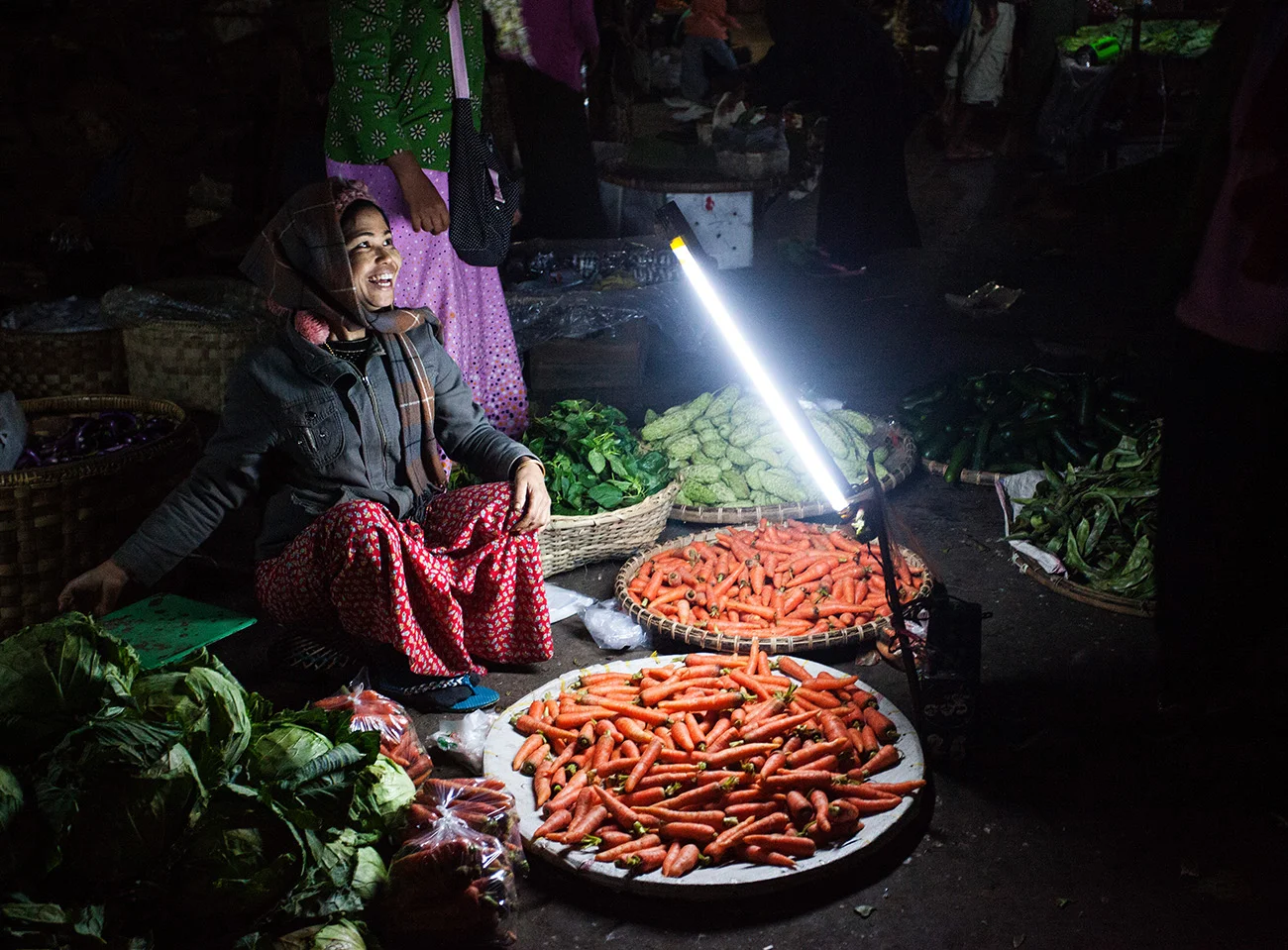
The next morning I woke up ridiculously early (4:30) because I wanted to take some sunset photos on Mandalay Hill, but when I walked down the street I was shocked at how busy it was. The market had already began and the women had all set up their baskets on the roadside, lighting their goods with candles or bright LED bulbs. I ditched the Mandalay Hill plans and just wandered around the market for a few hours. Everything about it seemed so fascinating to me. The clothing, the yellow thanaka bark on the womens faces, the strange vegetables, the monks receiving alms, the old bicycles and wooden pushcarts, and the energy at this time of morning. The motorbikes and LED lights were the only things betraying the fact that this was almost 2014. 

Man hauls bags of garlic at the early early morning market

Man hauls bags of garlic at the early early morning market

LED lights are used to illuminate the fresh produce

LED lights are used to illuminate the fresh produce

But some still prefer the candle light

But some still prefer the candle light

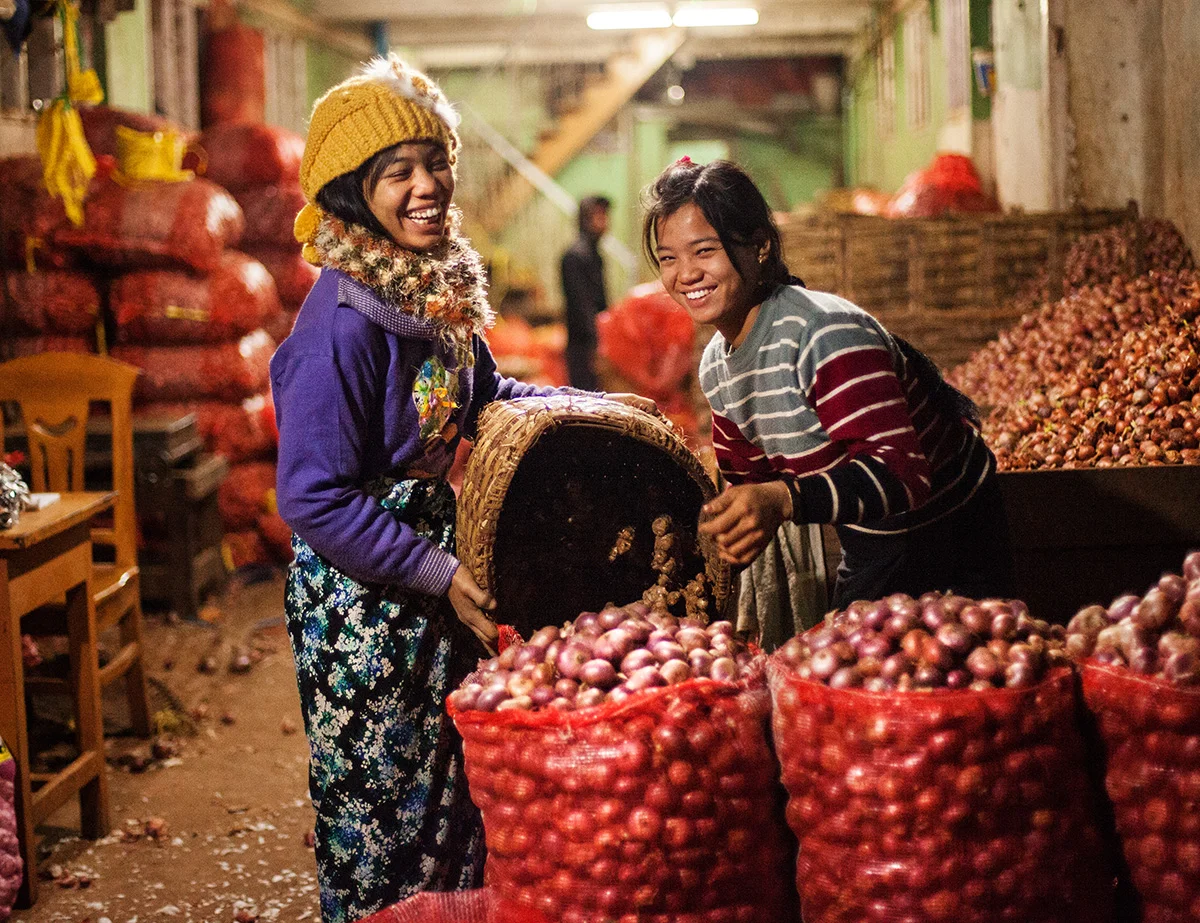
girls at the onion warehouse

girls at the onion warehouse

streets get more crowded as dawn approaches

streets get more crowded as dawn approaches

I liked this outfit

I liked this outfit

Monks ply the roads collecting alms

Monks ply the roads collecting alms


During the day I found a motorbike driver to take me to some of the sights around town. ie: Pagodas! This is at the point where seeing new pagodas was still fresh and exciting to me (it wears out fast) so I really enjoyed walking around and seeing all the monks (OMG MONKS! MUST TAKE PHOTOS!) and people praying. At sunset we went to Ubein Bridge, a famous teakwood bridge, that has a very interesting confluence of tourists, locals, and monks walking across it. Later I found some people to hit the Myanmar drinking establishments with, and the next day it was off to the ancient temples of Bagan!

They have female monks too

They have female monks too

IMG_7046.jpg
Buddhists often buy a bird to set it free, which is said to earn merit

Buddhists often buy a bird to set it free, which is said to earn merit

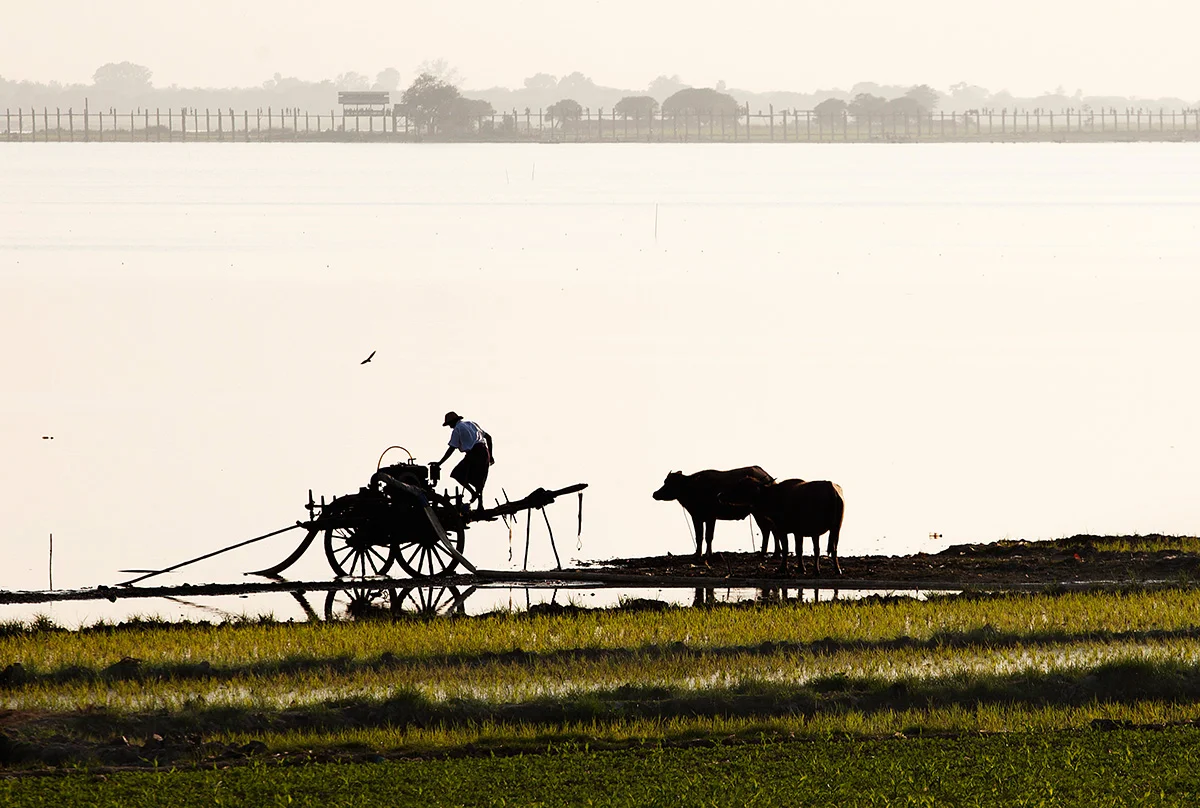
A farmer works with the Ubein Bridge in the background

A farmer works with the Ubein Bridge in the background

I love the silhouttes of the different people crossing the bridge

I love the silhouttes of the different people crossing the bridge

Photos Photos Photos: Wrapping up Indonesia

Ok I'm just going to post a bunch of photos that I like but never really got a chance to post. They're from the boardwalk in Labuan Bajo, the beaches around Bira, and the markets in Rantepao. Enjoy!

Guys playing hand and leg volleyball ( I have no idea what this game is called)  in Labuan Bajo

Guys playing hand and leg volleyball ( I have no idea what this game is called)  in Labuan Bajo

girl eats a mango on the boardwalk of labuan bajo

girl eats a mango on the boardwalk of labuan bajo

traditional boat building near Bira, Sulawesi

traditional boat building near Bira, Sulawesi

the beach was a bit dirty after Indonesian party goers came in for the weekend from Makassar

the beach was a bit dirty after Indonesian party goers came in for the weekend from Makassar

girl in the island village near Bira

girl in the island village near Bira

woman collecting clams/seaweed/rocks/who knows at sunrise at the beachside village in Bira

woman collecting clams/seaweed/rocks/who knows at sunrise at the beachside village in Bira

kids using a boat as a walkway

kids using a boat as a walkway

sunset, Bira

sunset, Bira

walking on the clouds

walking on the clouds

_MG_4916.jpg
guy preparing his fishing boat

guy preparing his fishing boat

using a log to haul a boat onshore

using a log to haul a boat onshore

I have no idea! This is definitely the weirdest photo I took in Indonesia

I have no idea! This is definitely the weirdest photo I took in Indonesia

Man looking to sell his cock at the market in Rantepao, Sulawesi

Man looking to sell his cock at the market in Rantepao, Sulawesi

_MG_5188 crop.jpg
sun shield

sun shield

creepy

creepy

_MG_5261 crop.jpg
Man fondles his cock 

Man fondles his cock 

Hey baby...

Hey baby...

Is this idyllic or what?

Is this idyllic or what?

The view of the coast from the plane taking off from Makassar, Sulawesi. So long Indonesia!!

The view of the coast from the plane taking off from Makassar, Sulawesi. So long Indonesia!!

Next up, Myanmar!

Tanah Toraja and the Path to Heaven

Life in Preparation of Death

_MG_5328.jpg

After diving at Komodo I headed a bit north to a big starfish shaped island named Sulawesi. I flew into the capital, Makassar, which of course is sprawling, ugly, and dirty, just like all big Indonesian cities. I bused out the next morning to hit the nice beaches of Bira and then head up North to Tana Toraja, an area known for its elaborate funeral processions and ceremonies.

_MG_5549.jpg

In Torajan, the funerals are often massive, expensive, pre-planned, and scheduled, similar to that of a western wedding. You might be wondering how exactly funerals can be organized in advance? When a member of the Torajan community passes away the body is crudely mummified and stored under the house so the family has time to save up for the funeral. This can take months or even years depending on the size! So its fairly common to have dead grandma chilling in the basement for a while. The belief is that the person isn't really dead until their spirit can ascend to heaven at the funeral, so family members might come down and leave some food or have a chat with their somewhat taciturn relative. 

When the funds are adequate its time to get the show on the road! These funerals are big public events, so theres a lot of preparation involved. The family will set up wooden huts for seating, which of course in traditional torajan style also have the big curved roofs, called Tongkonan. All around Rantepao you can see these unique structures, which for the locals are meant to serve a link to their ancestors, as well as show status. It's a bit odd to see people living in little shacks next to these beautiful Tongkonan, but in Torajan culture the main focus isn't this life, but the next. 

_MG_5395.jpg

The funeral ceremonies last for a few days, with the size depending on the status of the person who died. The success of the funeral isn't measured by how many people that attend, but rather how many animals are offered up to the gods, primarily the number of water buffalo. These buffalo are very important to Torajans as it is believed a person's spirt will ride the spirit of a dead buffalo into heaven. Sounds kind of fun, doesn't it?

The funeral we attended was a three day affair. Me and two lovely German girls hired a guide to take us to the ceremony on day two. It's not mandatory to have a guide, but its nice because they introduce you to the family, you give them some small gifts, and they show you a place to sit and drink. Keep in mind the other guests are bringing things like chickens and pigs to slaughter, while we foreigners get off easy with a carton of cigarettes. I suppose its a bit odd being a stranger at a funeral, but the people were very welcoming, and you feel like you're part of the ceremony, not just an outsider looking in. 

_MG_5460.jpg
_MG_5393.jpg
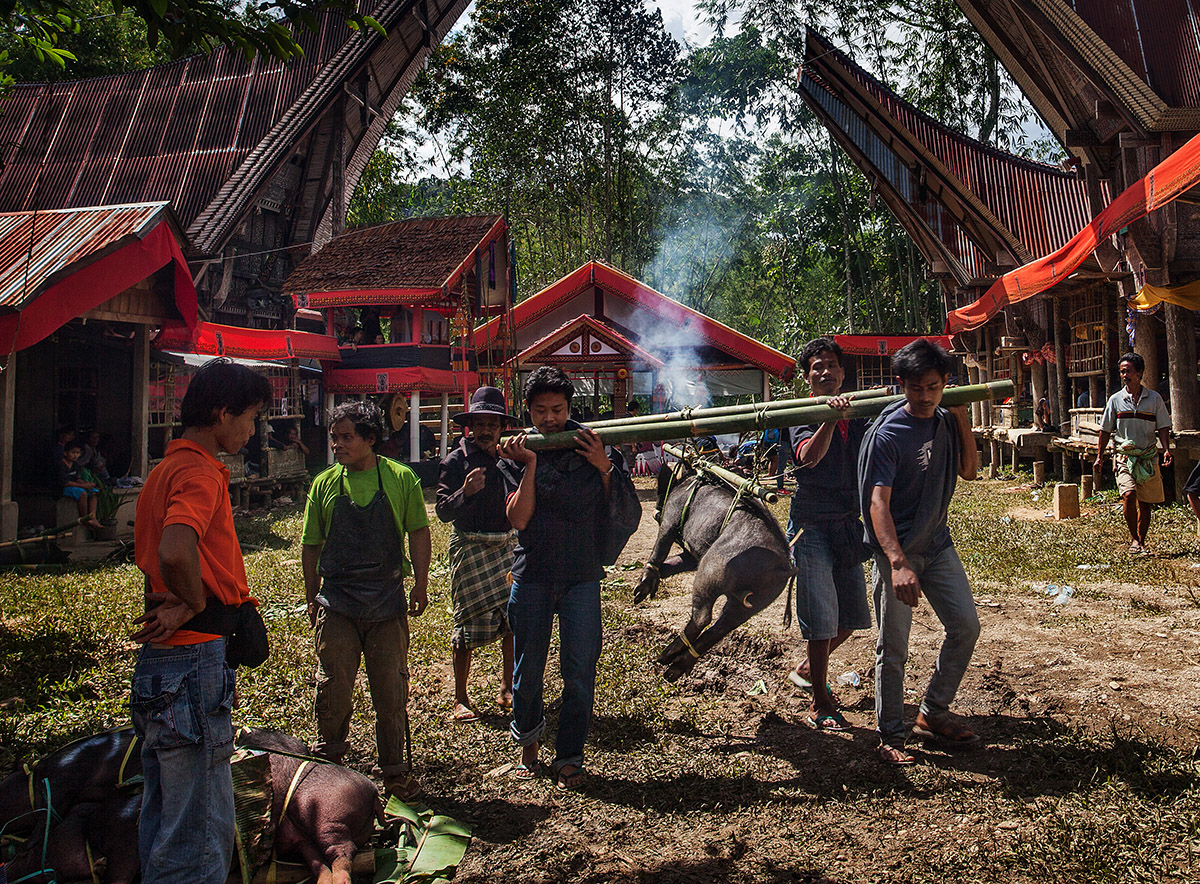
The scene in the main yard. Men carry off a pig to be slaughtered

The scene in the main yard. Men carry off a pig to be slaughtered

The second day involved a few processions of the deceased's family through the main walkway; the female members are bathed in white make-up, wear special red dresses, and carry around some sort of wooden sword, making them look as if they came straight from the scene of a bad sci-fi movie. But outfits aside, the day was mostly just a lot of pig slaughter. When you walk in you can see pigs lying everywhere lashed to bamboo poles. The poles are used to carry the pigs off when the time comes. They don't make the killings a public spectacle, but just walking around you see plenty of it. They knife the pig, singe off the hair with a huge blowtorch, cut out the internal organs, and chop it all up. Yep, a whole lotta knifing, singeing, and chopping is what I mostly remember from the day. Afterwards the meat will be cooked up and served to the guests. No catering here! The rest of the meat will be distributed to the people of the village and other family members. 

A man sheathes his sword after killing a pig

A man sheathes his sword after killing a pig

blowtorching the dead pigs

blowtorching the dead pigs

A girl from the deceased's family looks on

A girl from the deceased's family looks on

The next morning we came back again to witness the final day of the funeral, the buffalo sacrifices. Giving a water buffalo to the deceased is basically the ultimate gift. A good buffalo is very expensive and can take many years of saving in order to purchase one. The more that are slaughtered, the greater the chance the deceased has of getting to the afterlife. Because ya know if your soul falls off that first buffalo spirit heading to heaven, its nice to have a dozen or so more to catch you! 

When we arrived there were 10 buffalos lined up in the main yard. That amount of buffalos signifies a large funeral, but not huge by any means. There were two men who facilitated the sacrifice, one to hold it still, and another to slash open the throat. Some buffalos would stand in shock as the blood poured out of their neck while others would frantically jump around before collapsing, much to the amusement of many of the guests. Our guide said that while growing up he never felt any remorse for the animals because its all just a normal part of their lives. All the cheers from the crowd definitely cemented that view. We watched about 5 or 6 of the buffalo sacrifices and then decided that we had seen enough carnage for one morning, happy we had eaten beforehand. After all the killing eventually the body of the deceased will be carried to to their tomb, preferably inside a cave, where the body will be laid to rest and the funeral will end. 

I must say, those buffalo slaughters are probably the most gruesome thing I've seen while traveling. Although I guess its important to remember that these buffalos live a free ranging lifestyle and are taken good care of. They're killed quickly, (one wishes it was quicker) and the meat is not laid to waste. So even though its quite shocking to see, I don't think its inhumane or anything like that. I'm going to a couple photos from the ceremony, which are a little graphic, so scroll down at your own risk. The men certainly seem to find a bigger kick out this kind of thing than the women!

First buffalo goes down

First buffalo goes down

The  mood is quite jovial as another one bites the dust

The  mood is quite jovial as another one bites the dust

Mother of Dragons

Komodo National Park: Home to the Dragons (and other stuff)

The viewpoint looking over the islands at Rinca National Park, off the island of Flores

The viewpoint looking over the islands at Rinca National Park, off the island of Flores

When most people think of Komodo national park, two words automatically spring to mind: Komodo Dragons! Yes, its true, the largest reptile in the world, the Komodo dragon, can be seen on the Komodo islands as well its next door neighbor, Rinca, and few other places. However the two words that come to mind should be Scuba Diving!!

A turtle floats by 

A turtle floats by 

The diving around Komodo is truly fantastic! There are tons of very good dive sites and a few spectacular ones. Originally I was hoping to do a live-aboard boat, but my timing wasn't too good as the dry season was just ending and the far south dive sites that are normally accessible by the live-aboard were no longer and option. I decided on doing day trips with Blue Marlin, and we had a fun group of divers as well as great instructors, which made the experience all the more enjoyable. During the week we saw plenty of sharks, massive wrasses and bumphead parrotfish, turtles of course, rays, sea snakes, eels, huge lobsters, I dunno, all sorts of shit. And then there's the color! The corals of the reef display a massive range of dizzyingly bright hues, which really is something to behold. If there's one thing I'll remember about Komodo, it's the colors. Well, and Manta Point...

Manta Point is basically a stretch of current in between reefs that acts a manta super highway as well as a good place to feed. It's a must do when diving at Komodo. You drop in the water and let the current take you along the bottom at around 13 or 14 meters and basically wait until you see some mantas gliding along. Once one is spotted you exhale to lose buoyancy and drop to the sea floor, hanging on to whatever you can get ahold of, so the current won't sweep you away. If you're lucky the mantas won't notice and will swim up close to your group. We got extremely lucky and saw something like 20 of them! It was a field day! As I'd never seen a manta before I got a real kick out finally being able to do the manta hand signal, which is flapping your arms at your sides when I spotted one. We even had one large black one stop and hover right in front of for a few minutes, like it was observing us just as we were observing it, before gracefully sailing away. Seeing the mantas move by you feel kind of like the slow unathletic kid (ie Brett Kotecki) at basketball tryouts. If only us divers could just glide through the currents like they do! 

Mantas swimming overhead at Manta Point (photo courtesy of Ewan Chamings)

Mantas swimming overhead at Manta Point (photo courtesy of Ewan Chamings)

Komodo is renowned for some of its intense drift diving, where divers must battle heavy currents. These dives can be quite dangerous if you get sucked up or down quickly before realizing what is happening. We experienced a few strong currents here and there, but nothing wild like I expected. Theres a couple of dive sites called Castle Rock, Crystal Rock, and the Cauldron that are known for having some crazy drifts, but I went right after the full moon, which apparently is when the currents were at their lowest. No need for negative entries (diving off the boat and descending right away rather than meeting at the surface), which actually bummed me out a little bit because some of the stories I've heard made those dives sound pretty damn exciting. Oh Well. But overall I think Komodo is the best dive destination I've been to so far, really only being trumped by a few of the remarkable dive sites at Sipadan in Malaysia. I give it a big thumbs up!

IMG_0116.jpg

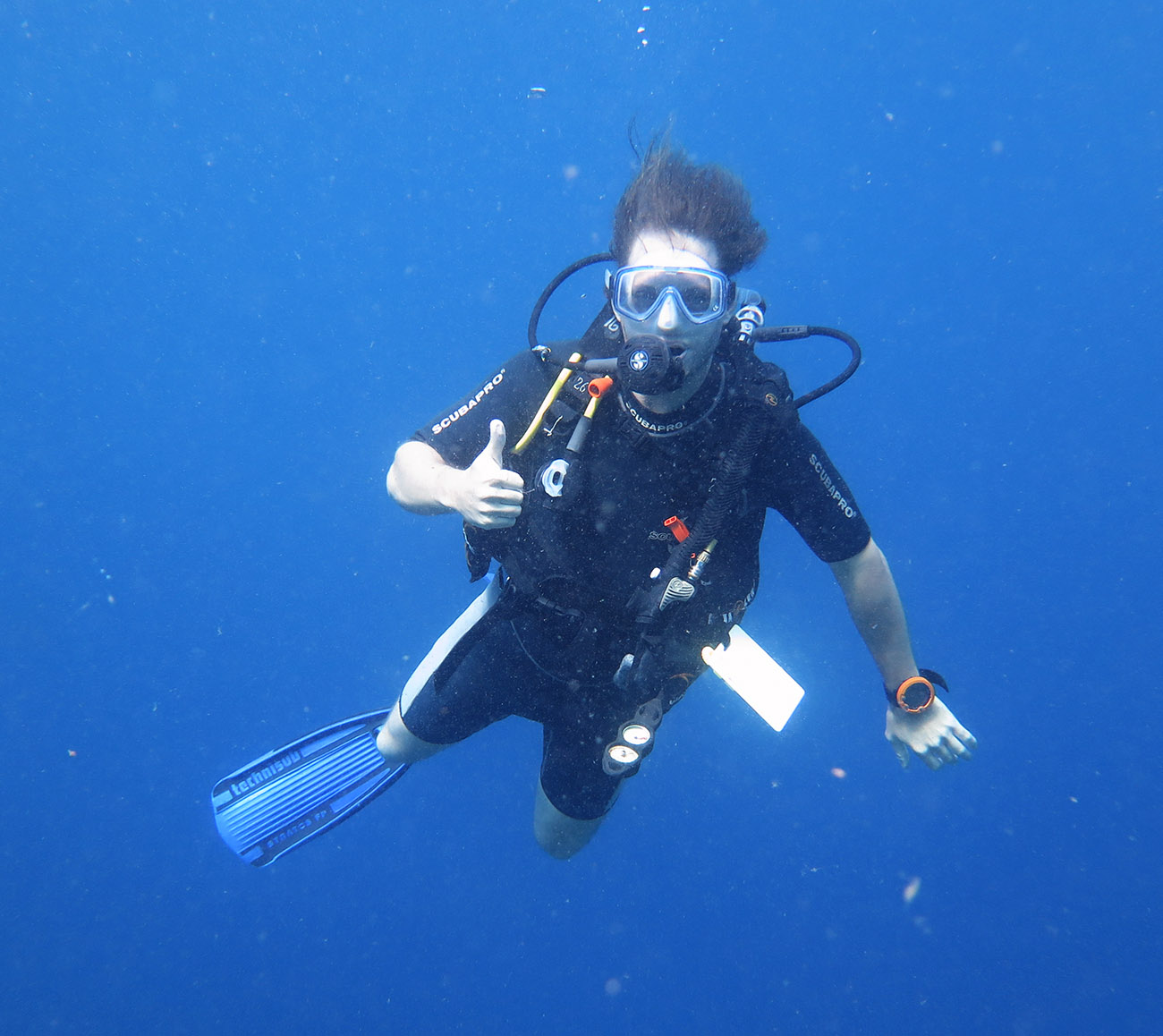
Unfortunately because most of my time was spent underwater, and I don't have an UW casing, I don't have any dazzling sea life photos to share. I got the manta pic from one of the other divers in our group, and the other two are from the Gilis, when I rented a camera for one dive. Although most of those photos turned out like crap! I must say, photography is very difficult underwater. You've got to worry about keeping still, the white balance, fiddling with buttons on the awkward camera casing, as well as the other dive-related stuff, like running out of air and the like. But I know if I actually got into UW photography, eventually I'd have to get the big ole DSLR casing and externally mounted flash, as the extra lighting really helps bring out the colors that get filtered out of the UV spectrum underwater. Which is also why most amateur underwater photos you see often look dull and muted, and well kind of suck. And I hate taking sucky photos! But the casing is expensive and cumbersome, not exactly ideal for long term travel. Maybe some day...

But hey, you're probably wondering when I was going to get to those big stinking dragons! It is Komodo after all!

dragons chilling under some guy's house in Rinca

dragons chilling under some guy's house in Rinca

We went to Rinca island to check out these massive beasts. To be fair this was only like an hour of out my week in and around the Komodos. You get the island and a guide shows you to where the dragons hang out, which is mostly in the shade under trees or people's huts, because its hot as hell during the day. Then everyone says "oooh" and "aaahh" and takes their photos of these big scaly creatures, who aren't really doing much of anything. Then you go for a hike, but like I said, it's hot as hell, so before you know it you've had enough and you're back on the boat. And that's it! You've seen the dragons! Although I didn't really learn much about them from our guide, I did do a little research afterwards, and they really are interesting animals. Which leads to my next segment:

FUN KOMODO FACTS WITH ADAM

I didn't know shit about Komodo dragons before I came here, and I'm guessing neither do you, until now!

There are less than 5,000 dragons left in Indonesia, with the majority residing in the Komodo and Rinca island sanctuaries as well as a few other places. These carnivores have been around for millions of years and look the part! You notice that they are constantly flicking their tongues in and out, which they use to detect taste and smells, sometimes dead and rotting flesh up to a few miles away. Mating season begins in May, with the males fighting each other to win the females. Courtship involves several days of wrestling, with the female attempting to fight off the male with her teeth and claws. For intercourse the female must be fully subdued (rape?!), so that the male can insert one of his two penises into the female. Yes, you read that right, the male has what is known as a hemipene, which is sort of a double ended penis. Double the pleasure, double the fun!  According to wiki the hemipene often has hooks or spines which help anchor it into the vagina. Sounds great, eh ladies?

_MG_4591.jpg

After an incubation period of 7-8 months the newborns chip their way out of their egg with their eggtooth and eventually are forced to live up in the trees for the first few years of their lives, as they are quite defenceless and can fall prey to canniballistic older dragons. Once they get big enough they come down and enjoy their spot on land with their pals, where they can join in on the hunting trips. Supposedly the big lizards can eat 80% of their weight at a meal and can live off as little of 12 meals a year. Their appetite is voracious, similar to Ed's at 3 in the morning when some large pizzas are in the freezer. During one of these feasts they might even ram the  animal carcass against a tree to force it down their throats faster. Later they lay in the sun to speed digestion of their meal, so it won't rot inside their stomach. 


The dragons are slightly venomous, but this is believed by scientists to be overstated and misunderstood by the public. 

Eventually, after living for up to 50 years, these killing, raping, cannibals die. The End

The Island of Flores

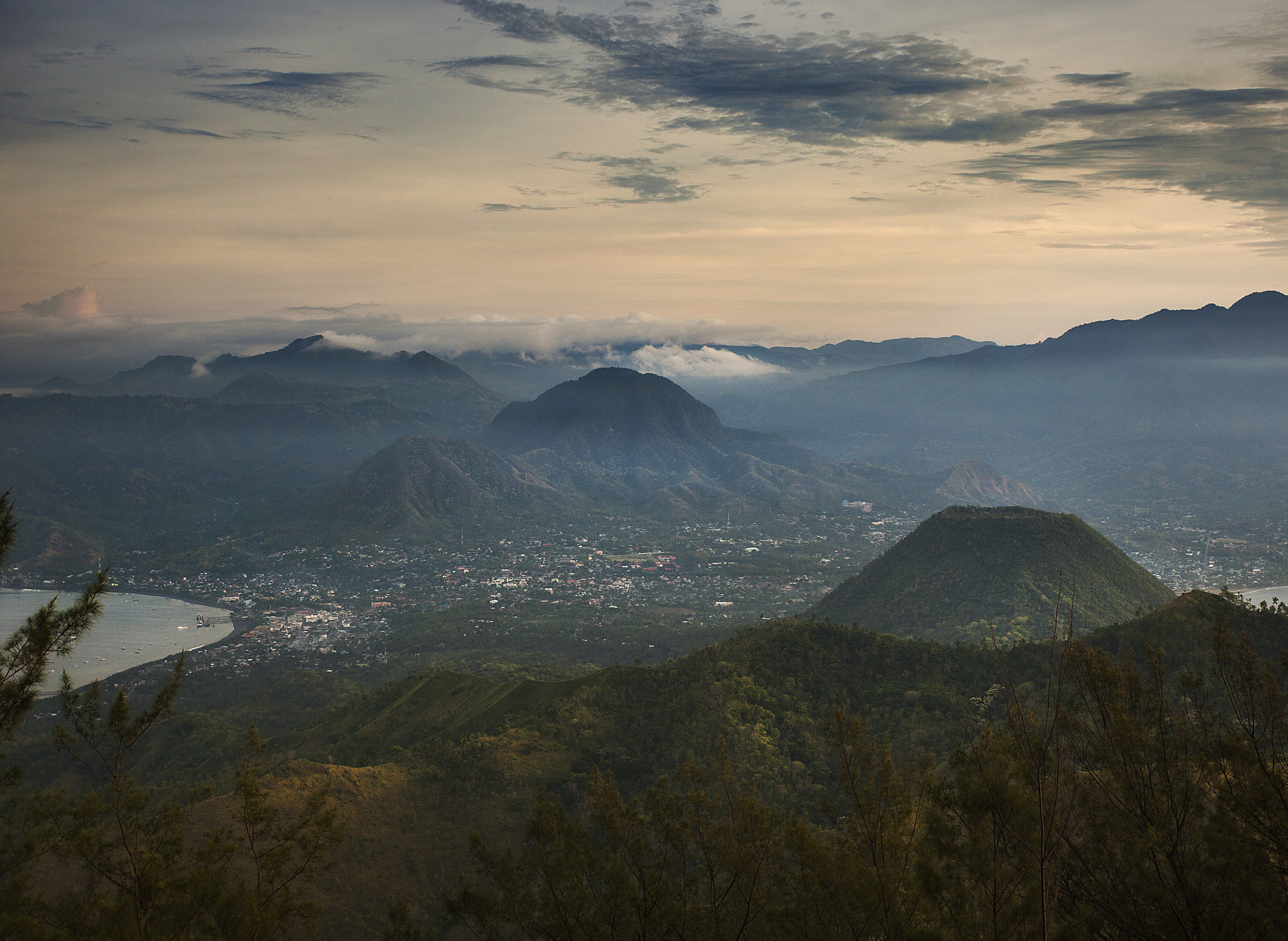
The view of Ende from the summit of Gunung Iya

The view of Ende from the summit of Gunung Iya

I flew into Ende and worked my way west overland to Labuan Bajo and Komodo National Park

I flew into Ende and worked my way west overland to Labuan Bajo and Komodo National Park

So after seeing everything that I wanted to see in Bali and Lombok it was time to head to the island of Flores, three islands east of Bali. I was tempted to take a four day boat trip from Lombok, but after listening to some stories about the conditions on the boat I decided to take a pass. I had heard that there's nowhere to sit, the food is lousy, there were rats, you sleep on the floor, and if its raining there isn't really enough room in the cabin for everyone to sleep and stay dry. No thanks! A flight to Ende it is!


The town of Ende is a port city that's almost entirely Muslim, unlike most of Flores. It's pretty unattractive and dirty, which is why most tourists don't really stay here for any longer than they have to. You do get lots of attention walking around the city though! I had read about a nice volcano hike on Gunung Bagging, a database of Indonesian volcanoes, so I at least wanted to do that hike and maybe rent a motorbike to check out the countryside. However there are no tourist facilities and almost no English speakers, so finding a bike, or guide, or even a map was fairly difficult. When I did inquire about renting a bike around town I did get a few offers, but at the ridiculous price of 200,000 baht per day, which is 4 times the price I normally pay. I think not!

boys hanging out down by the pier, Ende

boys hanging out down by the pier, Ende

having some fun with the kids on the street

having some fun with the kids on the street

to the waves!

to the waves!

After walking around for a while the following day a man on his motorbike saw me and came over to chat. An English speaker! He said he was a guide and could take me wherever I wanted to go. As I had been aimlessly wandering the town for a few hours this offer sounded pretty good. He suggested the Wolotopo traditional village, we worked out the price, I hopped on the back of the bike, and off we went. Well the village wasn’t exactly ‘traditional’ in the sense that the traditional villages normally have longhouses with thatched straw roofs (okay, there was one), but it was still interesting enough to walk around for an hour. Lots of people wanted me to take their photo, which always enjoy doing. By far the most awkward part of the trip was when I was talking to one of the rare people who spoke any English and he asked if he could come to my hotel. Confused, I told him there was nothing at my hotel, but he said he’d really like to see it. Since I didn't seem to understand what he could possibly want to see at my hotel, he then utilized a more direct approach and tried grab my balls. Alright, time to get the hell outta there! I certainly wasn’t expecting any encounters like that in small, conservative, Indonesian village, but there ya have it! I hurried to find my guide and we zipped back into town. He then arranged a guide for me early the next morning so I could hike up to the top of Gunung Iya, the volcano that overlooks Ende. 

Many women still do traditional weaving in Wolotopo village

Many women still do traditional weaving in Wolotopo village

This is what happens to your teeth from a lifetime of betel nut chewing

This is what happens to your teeth from a lifetime of betel nut chewing

Now when I first got to Indonesia I was pretty reluctant to take a guide when hiking volcanos because I really don’t see the point if I can do it myself. On Bali’s Gunung Agung it was supposedly not allowed to do the hike without a guide, but I scouted out the trailhead during the day, showed up at 11:30 at night to start the hike, and made it up through the darkness in 6.5 hours with few problems. A little bit dumb? Maybe. Anyway for Iya, the hike is only an hour to the top, so it should be easy to do alone right? Well, I had read a trip report on Gunung Bagging from the founder of the site (experienced volcano hiker obviously) and him and his partner almost died on the descent because they did it during the middle of day with no backup water and they couldn’t find the extremely vague path down. Every way they tried dead-ended into steep ravines. So they were both trapped on the volcano in the scorching heat, suffering from heatstroke and exhaustion, with no water. Luckily one them had his cell phone and was able to call his wife in Thailand, who was able to contact his travel insurance company, who then contacted the police in Ende and search party was formed to get them down. Pretty crazy! Well, this story had me rethinking my do-it-on-my-own policy. Anyway this particular volcano erupted about 30 years ago and left behind a big smoking hole with a lake that is supposed to be cool to see. I woke up at 3:30 the next morning, got picked up the guy I met yesterday, he took to a small house near the foot of volcano where my hiking guide emerged, and we were on our way! 

approaching the summit

approaching the summit

The pits of doom

The pits of doom

As expected the hike took about an hour, we made it the top for the sunrise, and it was well worth the early start! So after we got down I took a nap and then caught the next bus to Moni to check out the famed Gunung Kelimutu, a volcanic crater with three differently colored lakes that change colors depending on the day, the season, and the levels of volcanic gas activity. It’s the main tourist attraction on mainland Flores. I met some guys at my guesthouse who were also looking to see it the next morning so we arranged a bemo at 5am to take us there. Unfortunately its not really a hike to get the top, its more like a 15 minute stroll on a paved path (a goat track if you will) to get to the lakes. We got to the lookout point and were treated with a nice sunrise over the two adjacent lakes, one that is a weird seafoam green color and one that is dark turquoise color, as you will see. 

The multicolored lakes of Kelimutu

The multicolored lakes of Kelimutu

 We spent more time taking photos and following the path that circles the crater rim before calling it a day. I hopped on the bus back to Ende and then hopped on another bus to take me to the small town of Boawae, where Gunung Ebolobo volcano awaits!


cool circular rainbow that formed in the blowing mist

cool circular rainbow that formed in the blowing mist

The bus driver dropped me off at the gas station in town and I was left to my own devices to figure out where I was going next. I was getting lots of strange looks as apparently no tourists visit this town, like ever. I wanted to get to the village at the foot of the volcano, but I idiotically had forgotten the name! I thought I knew enough Indonesian to say “I want to go to the town near the volcano” or something at least close to that, but every time I tried I was getting nowhere. Eventually someone brought me into the house and called up someone who spoke some English (a very loose definition of 'some') and he eventually figured out where it was I wanted to go. Molowaki!!

He said there was no hotel there, but I had read you could sleep at the guide’s house, so I convinced them to take me on a motorbike. Bad idea!! I’m sure most of you haven’t ridden uphill on the back of motorbike with a full backpack, but its not easy! You’re trying to lean as far forward as you can, but the pack is always pulling you backwards, wanting to pull you off the back of the bike, so you’re constantly working your abs trying to counter the weight of the pack. So anyway the guy didn’t have the most powerful bike and the very first steep uphill part the bike stalled when he was switching from 2nd gear to 1st, and then jerked really hard With the steep gradient and the weight of my pack I just went flying off the back! The bike’s front tire flew up in the air, he jumped off as well, and the bike crashed hard onto the pavement. Yikes. Everyone was fine (I landed squarely on my backpack) but the bike was not so lucky. My driver was not happy, not too happy at all. After his moaning I asked him how much it was to fix and he said 300. My American thinking brain kicked in; “Oh shit, 300 dollars!” Wait, wait, no, it was just 300,000 rupiah or about 30 dollars. So I paid for his repairs because that’s certainly a lot of money for him and after that we were on okay terms again. He ended up flagging down another motorbike driver for me, one with a better bike, who agreed to take me to the Molokawi. This was certainly not a good idea, but I can be quite stubborn sometimes.

This bike ride was by far the most gut-wrenching and sphincter tightening experience in Indonesia. The road of course was super steep and filled with potholes and broken pavement. Going over every single bump I was clenching my legs and my abs as hard as could, praying I wouldn't be going airborne again. It was a pretty brutal test of endurance. During the really rough spots I have to get off the death bike and walk, then hop back on again. After about half an hour I honestly thought my abs were going to give out. Now I know you're all thinking, "there's no way Adam's rock hard abs of steel could possibly give out" but it did indeed happen. About a kilometer from the village the road managed to get even worse, and I was so thoroughly exhausted from clinging on for dear life that I told the driver I had to walk. He drove along with my pack and eventually we made it to Molowaki in the darkness. It was dead quiet, but fortunately the driver showed me to the house where the guide lived. I was invited in, met his family, conversed in broken Indonesian, was fed some rice and vegetables, and shown to the spare bedroom. Wake up time: 3:30 am!

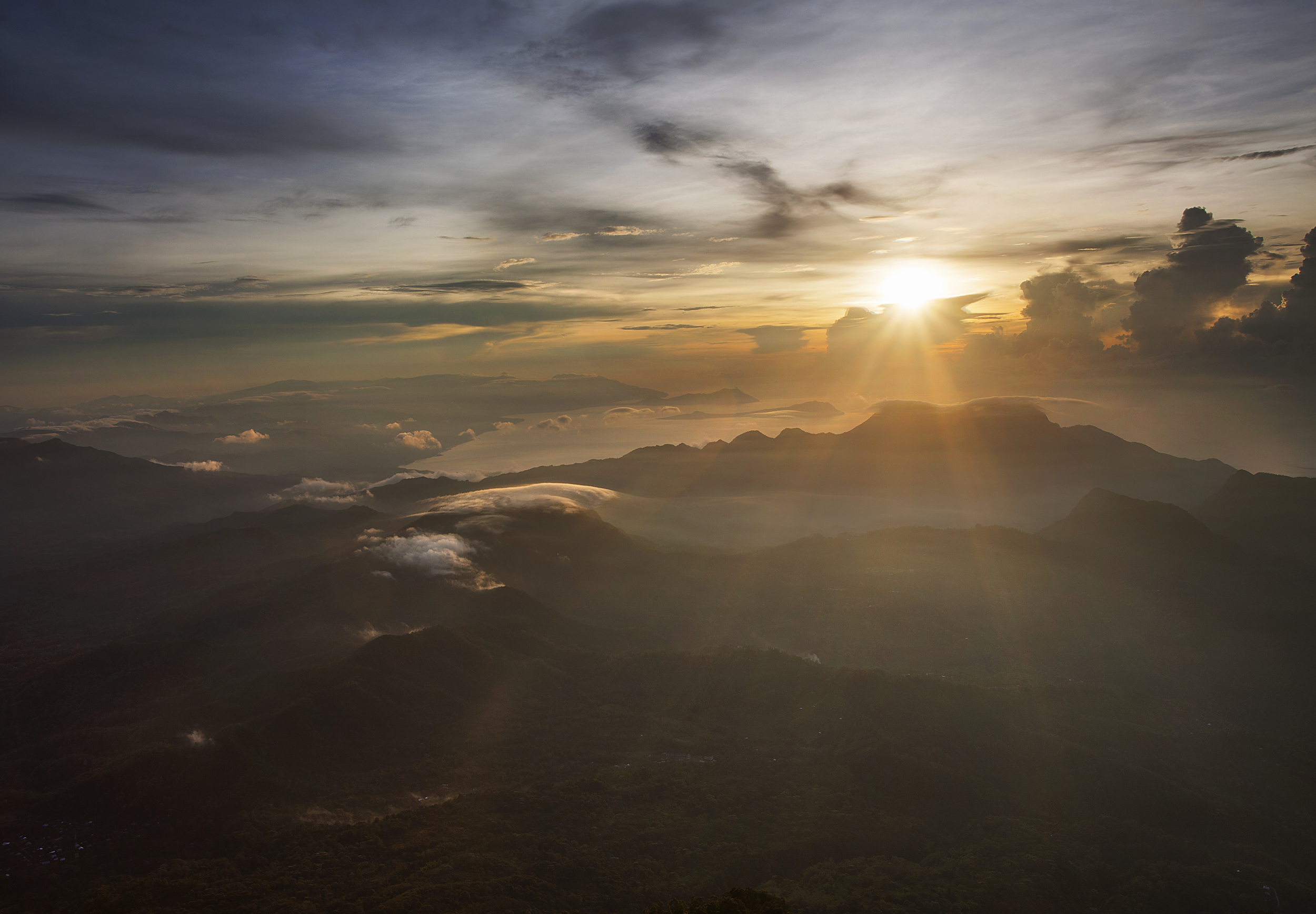
The hike itself was straightforward, nothing near as exciting as the motorbike ride. It was actually the guy’s sons who took me to the top, which took about 2.5 hours, and we made it to the summit so see the sunrise over the beautiful island of Flores. This was the nicest volcano sunrise I’ve seen and I think my favorite volcano hike to date. It was just a spectacular view from the top that really gives you that high on life feeling. After hiking around the summit for a bit we headed down, I was fed breakfast (more rice and veggies!) taken back into town (so much easier going down!) and caught the next bus to Bajawa. 

sunrise on Gunung Ebolobo

sunrise on Gunung Ebolobo

uninspired photo of the Bena village

uninspired photo of the Bena village

_MG_4451.jpg

Ok well this has drawn on too long, so I’ll try finish up. At Bajawa there are lots traditional villages, so you get there, pay the entrance fee, and the people living there all kind of stare at you or try to sell you something. It’s not really my thing. And once you’ve been to one, you’ve kind of been to ‘em all. I had much more fun riding to random small villages where the people are much more friendly and curious about the strange westerner that has just rolled into town. So I spent two days there and then it was back on the bus. I was going to go to Ruteng, which is about 5 hours away, but the weather was shitty and Ruteng’s main tourist attraction is also traditional villages! Ugh. So I decided to keep going to Labuan Bajo, the launching point to Komodo. After five more hours of blasting Indopop music, winding turns, and a dude puking constantly, I had arrived! Exhausted, I checked into the guesthouse I was dropped off at, the grossest one I’ve encountered in Indonesia, and despite the noxious fumes from the bathroom (err toilet pit) I promptly passed out on top of my not-so-white sheets. Next up Scuba diving Komodo!

The viewpoint at Rinca island

The viewpoint at Rinca island